
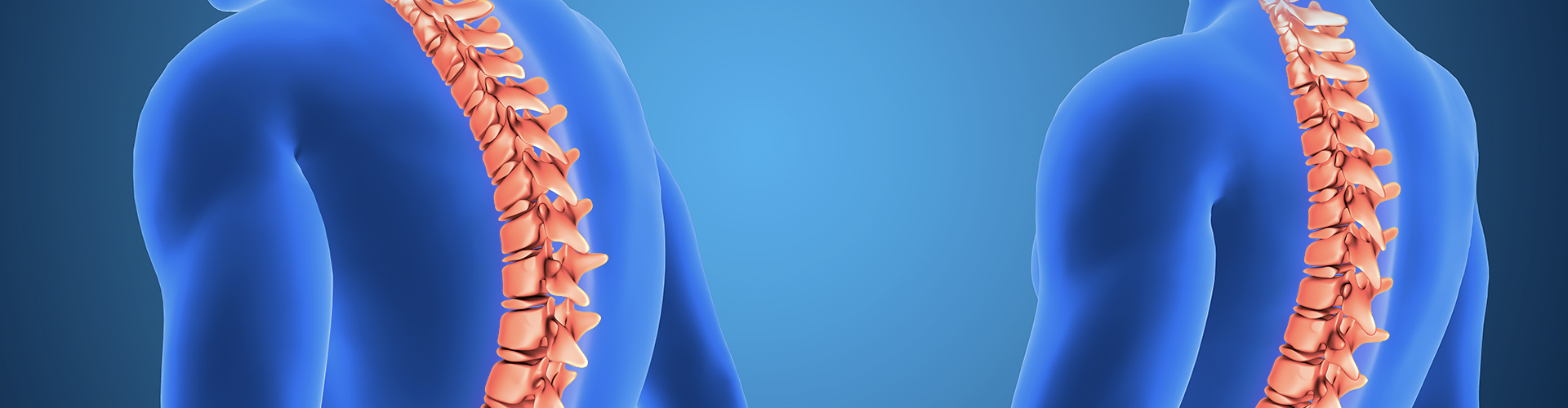
Kyphosis
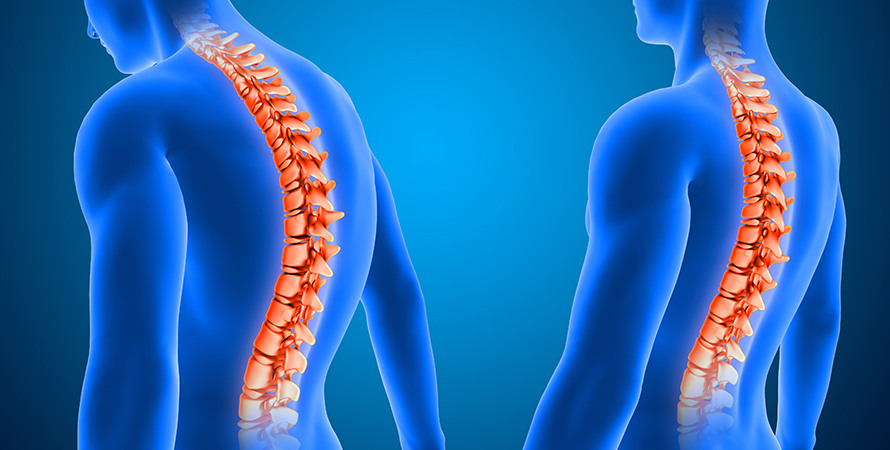
Kyphosis, commonly known as “hunchback”, is a condition in which the forward curvature of the spine in the back is greater than normal. Although not all hunchbacks pose a medical problem, underlying structural disorders may require treatment. Prof. Dr. Mehmet Tezer, an expert in spinal deformities, aims to protect your spine health with the correct diagnosis of kyphosis and personalized treatment planning tailored to the needs of each patient.
What is Kyphosis? Postural Kyphosis and Structural Kyphosis
In the dorsal (thoracic) region of the spine, there is a natural and healthy kyphotic curvature between 20 and 45 degrees. Kyphosis is when this curvature exceeds 45-50 degrees. To understand kyphosis correctly, it is very important to distinguish between the two main types:
-
Postural Kyphosis (Posture Disorder): It is the most common type. It usually develops in adolescents due to poor postural habits. It is a flexible curvature; that is, when the person consciously tries to stand upright or lies on his/her back, the hump is corrected. It is usually painless and can be corrected with exercise.
-
Structural Kyphosis It is caused by an abnormality in the bone structure of the vertebrae or discs. It is a rigid curvature and will not straighten even if the person tries to stand upright. This is the main type of kyphosis that requires treatment.
Scheuermann's Kyphosis Structural Hunchback in Young People
The most common cause of structural kyphosis in young people Scheuermann's disease. During growth, the anterior parts of the vertebrae in the back grow more slowly than the posterior parts, resulting in a “wedging” (triangular shape) of the vertebrae. This causes the spine to curve sharply and progressively forward. Unlike postural kyphosis, Scheuermann's kyphosis can often cause back and lower back pain.


Diagnosis and Evaluation Process in Kyphosis
The correct diagnosis begins with a physical examination by an experienced spine surgeon. The doctor examines the patient's posture from the side, asks the patient to bend forward and assesses whether the curve is rigid or flexible.
For definitive diagnosis and measurement of the degree of curvature standing lateral spine X-ray (lateral radiograph) is ordered. The X-ray will measure the degree of curvature and examine the vertebrae for the presence of a wedging characteristic of Scheuermann's kyphosis. The treatment plan is based on these findings.
Modern Approaches in Kyphosis Treatment
Treatment is determined by the type and degree of kyphosis, the age of the patient and the presence of symptoms:
-
Exercise and Physical Therapy: It is used in the treatment of postural kyphosis and mild structural kyphosis to correct posture, strengthen back muscles and increase flexibility.
-
Corset Treatment: It is used in growing children with progressive Scheuermann's kyphosis to stop the increase in curvature and help the spine to form more correctly.
-
Surgical Treatment: It is generally applied to correct and stabilize the spine in severe, painful, progressive structural kyphosis above 75 degrees, which carries the risk of causing neurological problems.
Frequently Asked Questions
This is the most common question parents ask. You can do a simple test for differential diagnosis: If the hunchback improves when you ask your child to stand up straight or lie on his/her back on a flat surface, it is most likely postural kyphosis (posture disorder) signaling. This condition can usually be treated with exercise and correction of postural habits.
However, if the hump does not improve even when the child tries to stand upright, if the curvature is rigid, and especially if it is accompanied by back pain, the underlying from a structural kyphosis (e.g. Scheuermann's kyphosis) is suspected. In this case, a spine surgeon should be consulted.
While postural kyphosis is usually painless, Scheuermann's kyphosis often causes pain at the apex of the back. There are several reasons for this pain: First, the vertebrae themselves, which have lost their normal shape and have become wedged, are under an abnormal load. Second, the muscles of the back and lower back are constantly overworked as the body tries to compensate for the hunchback. Over time, this leads to muscle fatigue and chronic spasms, causing pain.
No, no, no. Posture corrective vests only provide a temporary reminder of posture by pulling the shoulders back but have no effect on the bone deformity. Similarly, exercises and physical therapy are the main treatment for postural kyphosis and a very important treatment for structural kyphosis to strengthen muscles and reduce pain. supportive play a role. However, they alone cannot correct a structural deformity of the bone (such as Scheuermann's disease). Treatment of structural kyphosis may require a medical brace or surgery.
The kyphosis brace is used especially in children who are still growing and have progressive Scheuermann's kyphosis between 50 and 75 degrees. The purpose of the brace is to support the growth of the anterior part of the spine while stretching the posterior part of the spine, thus preventing further wedging of the vertebrae. In other words, rather than correcting the curvature, to prevent it from getting worse targets. To be effective, it should be used for long periods of time, such as 18-20 hours a day according to the doctor's recommendation, and until bone growth is complete.
Surgical treatment is usually considered in the following cases:
-
Curvature above 75 degrees Celsius severe and progressive cases.
-
It does not go away despite corset treatment and physical therapy and impairs the patient's quality of life. severe back pain.
-
When the curve has progressed so far that there is a risk of affecting heart or lung function.
-
In rare cases, kyphosis that compresses the spinal cord and causes neurological problems.
The aim of the surgery is to safely correct the deformity of the spine to provide a more stable posture, eliminate pain and permanently stop the progression of the curvature.
Due to the loss of water in the discs with age and the decrease in muscle strength, some forward leaning in posture can be considered normal. However, a pronounced and progressive hunchback usually indicates an underlying problem. The most common cause of kyphosis in old age osteoporosis (bone loss). Small compression fractures in the vertebrae due to osteoporosis cause the spine to collapse forward and increase the hunchback. The priority in treatment is to treat the osteoporosis itself, control pain and improve muscle strength and balance through physical therapy to prevent falls. Surgery is only considered in very severe cases that impair quality of life.
Severe kyphosis that goes untreated and exceeds 90-100 degrees can lead to serious problems in the long term. These include;
-
Chronic and difficult to treat back pain.
-
Body balance shifts forward, difficulty looking forward all the time.
-
Due to a narrowing of the volume of the rib cage reduced lung capacity and breathing problems.
-
Digestive system problems.
-
There are serious aesthetic and psychosocial problems. Early and correct treatment aims to eliminate these risks.
In herniated disc surgeries, the protruding disc fragment pressing on the nerve is removed, not the entire disc. There is a possibility that the remaining disc tissue may herniate again in the same place (recurrence). This rate is around %5-10 in operations performed by experienced surgeons.
The most important way to prevent hernia recurrence is lifestyle modification after surgery. Weight control, quitting smoking, paying attention to heavy lifting techniques and regular exercise, especially to strengthen the waist and abdominal muscles (core muscles), significantly reduce the risk of recurrence.