
Scoliosis
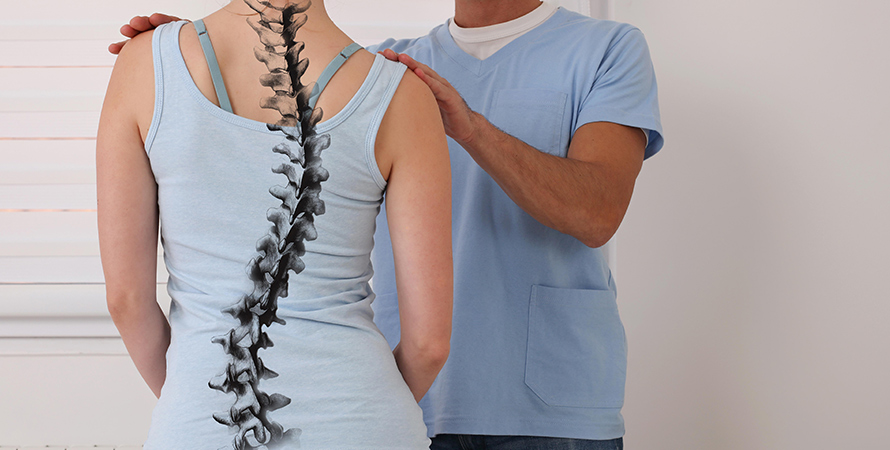
Scoliosis is a three-dimensional spinal deformity characterized by a sideways curvature of the spine. This condition, which especially affects growing children and young people, can be stopped from progressing and successfully treated when diagnosed early. Prof. Dr. Mehmet Tezer, who has extensive experience in the surgery of spinal deformities, offers the most up-to-date approaches for each patient in the diagnosis and treatment of scoliosis.
What is Scoliosis and Which Type is the Most Common?
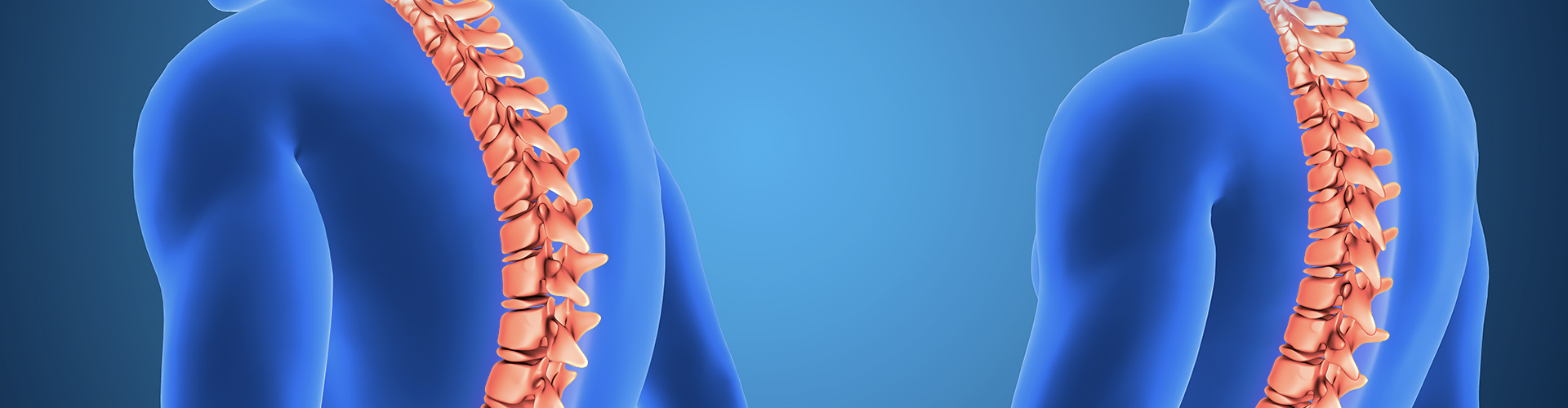
Scoliosis is a complex deformity of the spine in the thoracic (thoracic) or lumbar (lumbar) region, which is not simply a sideways curvature, but a rotation of the vertebrae around themselves. When the spine is viewed from the back, it has an “S” or “C” shaped appearance.
Vakaların yaklaşık %80’ini, nedeni tam olarak bilinmeyen “Adolescent Idiopathic Scoliosis” Forms. It usually occurs or becomes prominent in healthy children between the ages of 10 and 18 during the period of rapid height growth with the onset of puberty. It should be noted that scoliosis is not caused by factors such as poor posture, carrying heavy backpacks or choosing the wrong mattress.
Scoliosis Symptoms that Families Should Pay Attention to
Since scoliosis usually progresses painlessly, it can be difficult to recognize in the early stages. It is therefore critical for parents to observe their children. The main symptoms to look out for are:
-
One shoulder is higher than the other.
-
One shoulder blade is more prominent or protruding than the other.
-
Asymmetry in the waist curves and hip levels (one side appears more sunken in).
-
A bulge or hump on one side of the back when the child leans forward (Adam's test).
-
Clothes don't fit properly, one side of the garment is too tight.


How is Scoliosis Diagnosis and Treatment Plan Formulated?
If scoliosis is suspected during a physical examination, a standing X-ray (Scoliosis X-ray) of the entire spine is ordered for a definitive diagnosis. On this X-ray “Cobb Angle” The degree of curvature is mathematically calculated by an international measurement technique called.
The treatment decision is planned individually according to the degree of curvature (Cobb angle), the age of the patient, the stage of bone development (growth potential) and the risk of progression of the curvature. The main goal of treatment is to stop the progression of the curve, correct the deformity and provide a balanced spine structure. Treatment options include observation, bracing and surgical intervention.
Frequently Asked Questions
Absolutely not. In particular, the cause of "idiopathic" scoliosis, the most common type, is unknown. The word "idiopathic" already means "of unknown cause". Although it is thought that there is a genetic predisposition, your child's poor posture, the bag he/she carries, his/her sports or eating habits do not cause scoliosis. It is inappropriate for parents to blame themselves in this regard. Scoliosis is a medical condition that is no one's fault.
The potential for progression of scoliosis is greatest during the rapid growth of height in adolescence. Whether the curve will progress depends on two main factors:
-
The degree of curvature at the time of diagnosis: The higher the grade, the greater the risk of progression.
-
The patient's remaining growth potential: The risk is highest in children whose bone development is incomplete and who are still growing.
Curves below 40 degrees usually do not progress or progress very slowly after growth is complete. However, curves exceeding 50 degrees have the risk of continuing to progress, albeit slowly, throughout adult life, even if growth is complete. Therefore, the treatment plan is made by taking these risks into consideration.
This is a very important question. No, the main purpose of bracing is not to correct the curve, but to stop the curve from worsening, i.e. progressing, while growth continues. The corset supports the spine from the outside, acting as a kind of "mold" and preventing the curvature from increasing. It is the most effective non-surgical treatment method for children whose growth continues and whose curvature is between 25-45 degrees. For success, it is critical to use the brace for a long period of time, such as 20-23 hours a day, as recommended by the doctor.
Physical therapy and exercise are a very important part of scoliosis management. In particular, scoliosis-specific physiotherapy programs such as the Schroth method help to correct posture, correct muscle imbalances, increase flexibility and strengthen core muscles.
However, in a curve with a risk of progression, exercises alone may not replace bracing or surgical treatment. won't hold. During exercises, observation or corset treatment supportive and complementary in the postoperative period. It is an indispensable part of rehabilitation in the postoperative period.
The decision for surgical treatment is usually taken in the following cases:
-
If the curvature exceeds 45-50 degrees and tends to progress.
-
If the curve continues to increase despite brace treatment.
-
In adults with severe curvatures that cause pain or risk affecting heart-lung function.
The main aim of the surgery is to correct the curvature as much as possible in a safe way, to stabilize the spine and most importantly is to permanently stop the progression of the curve for life.
Modern scoliosis surgery "spinal fusion and instrumentation" is done with a method called In this procedure, titanium alloy screws are inserted into the vertebrae. With the help of rods attached to these screws, the spine is carefully straightened and returned to its ideal position. In the final stage, bone grafts are used to fuse the vertebrae together (fusion). Over time, this area becomes a single, solid column of bone. The implants (screws and rods) used are completely compatible with the body and do not cause any problems. lasts a lifetime, they do not need to be removed.
Scoliosis surgery is a major operation and carries risks such as infection and bleeding, as with any major surgery. However, the risk of spinal cord damage and paralysis, which patients are most concerned about, is reduced with today's technology. extremely low (below %1). During surgery "neuromonitoring" technology called the "Spinal Cord and Nerve Monitoring System". This system monitors the function of the spinal cord and nerves from the beginning to the end of the surgery and warns the surgeon of any risky situations. This technology has made scoliosis surgery much safer.
Yes. After surgery, patients can return to school in about 3-4 weeks (usually after 4-5 days of hospitalization). Once the healing is complete (approximately 6 months-1 year), the vast majority of patients lead a pain-free and active life. After the completion of the union, they can do many sports such as running, swimming, tennis and volleyball. Contact sports (wrestling, American football, etc.), which are only practiced at the professional level and put excessive load on the spine, are not recommended.